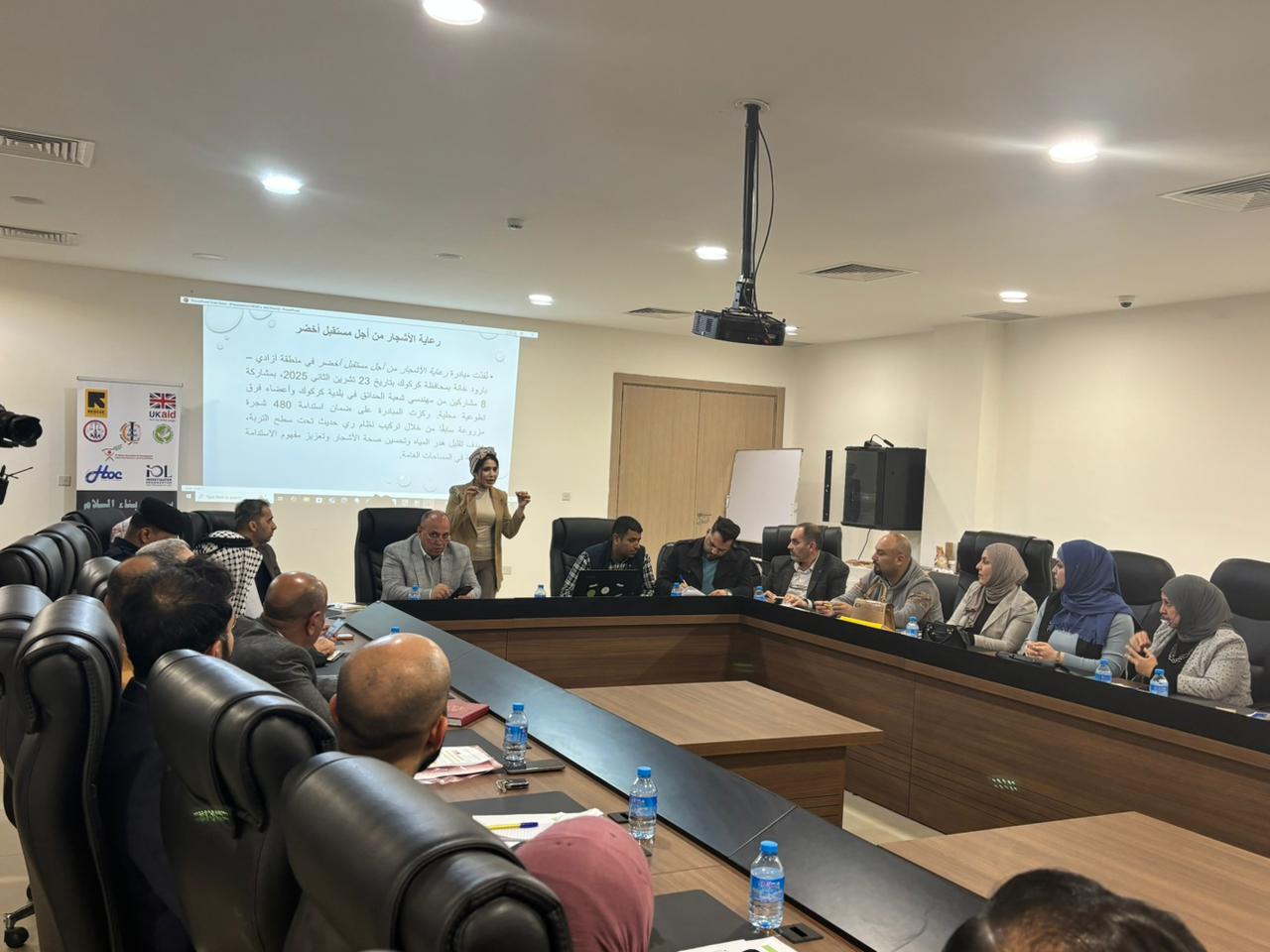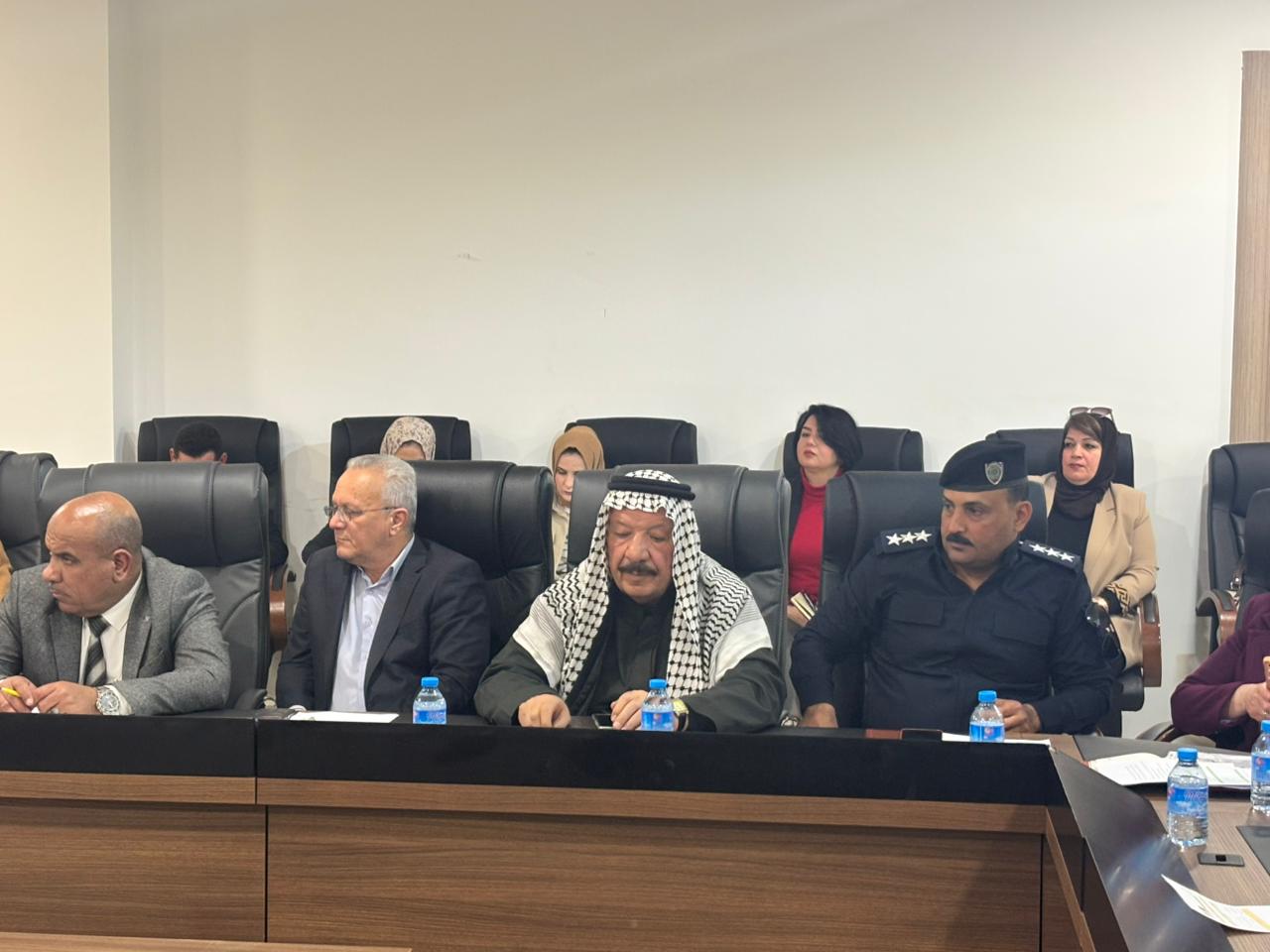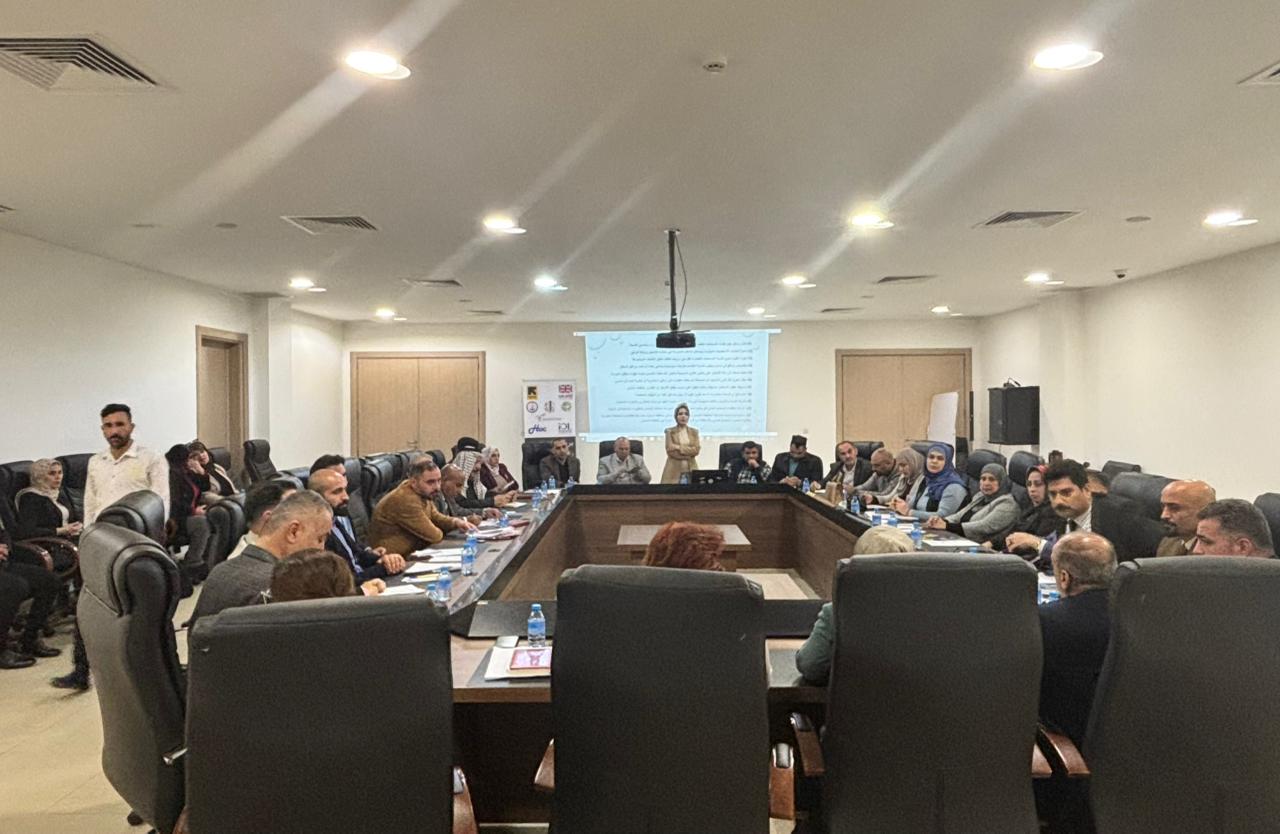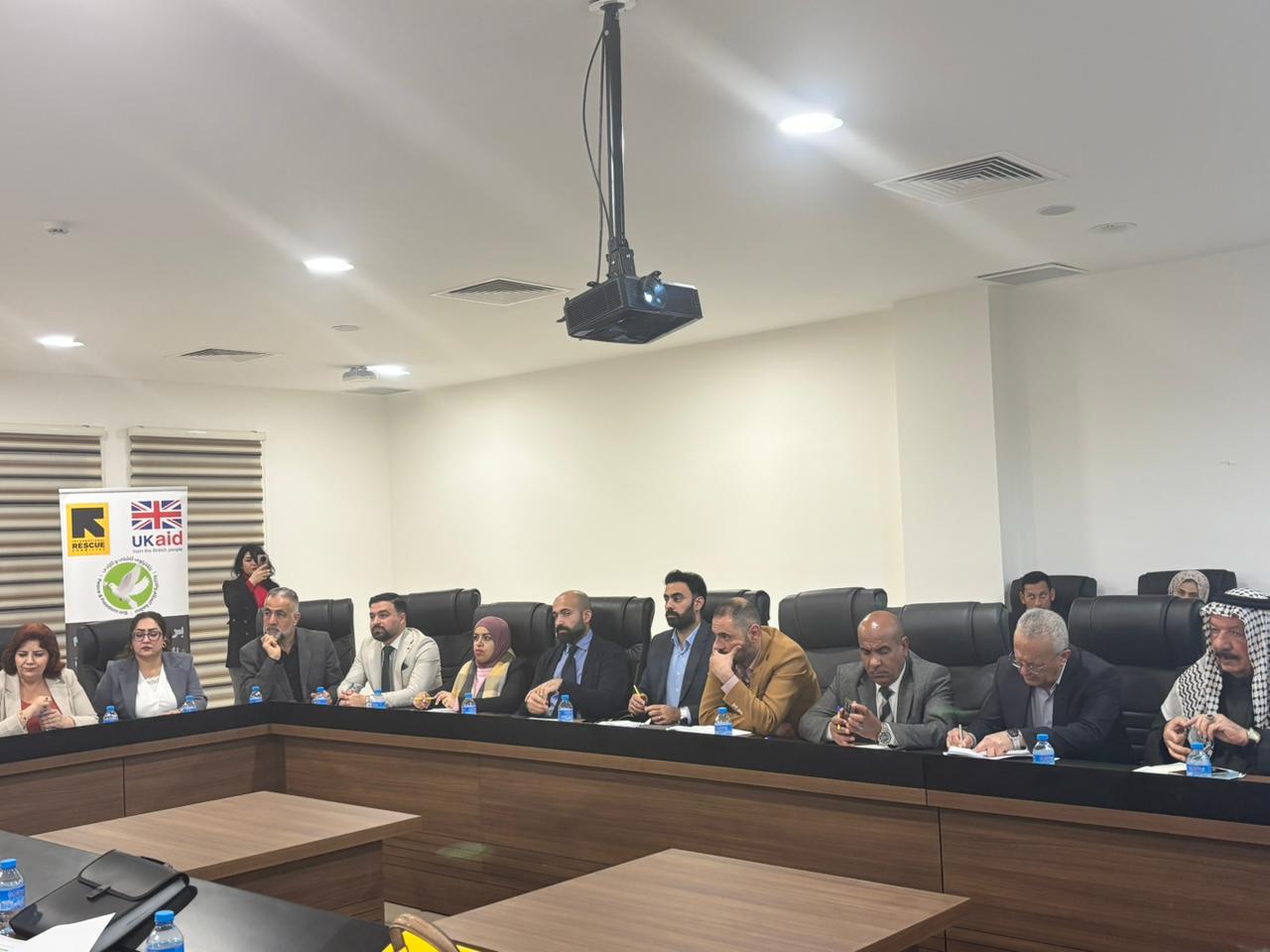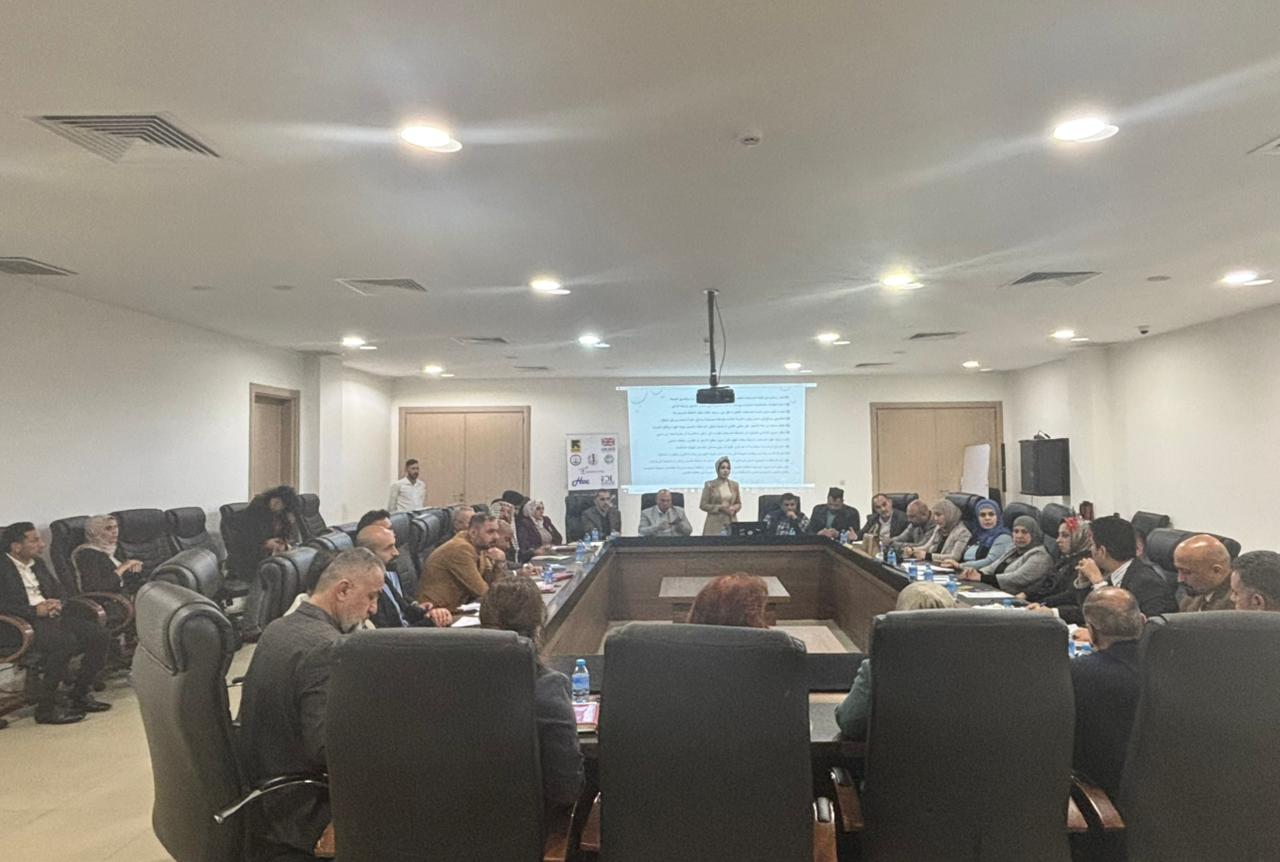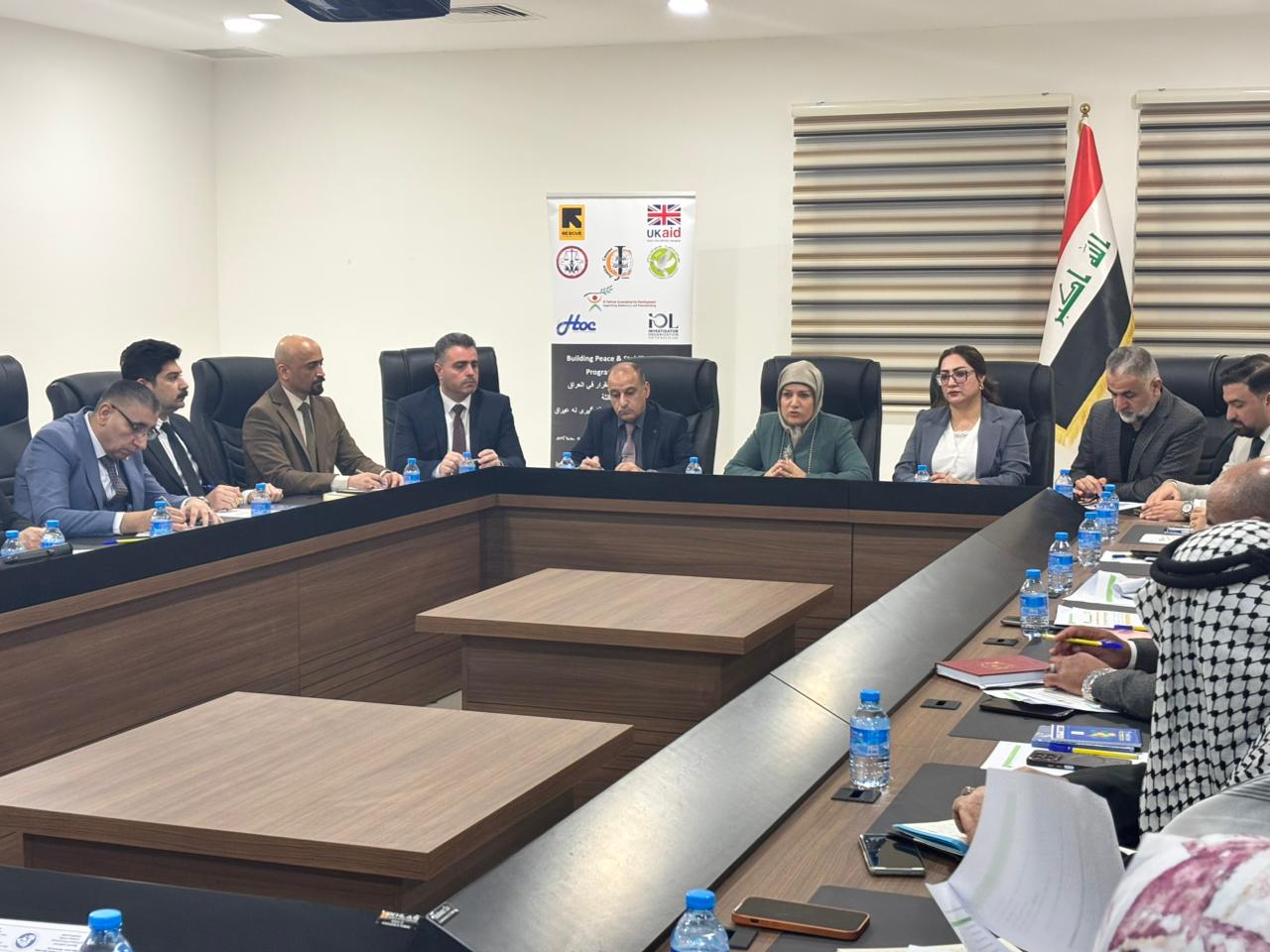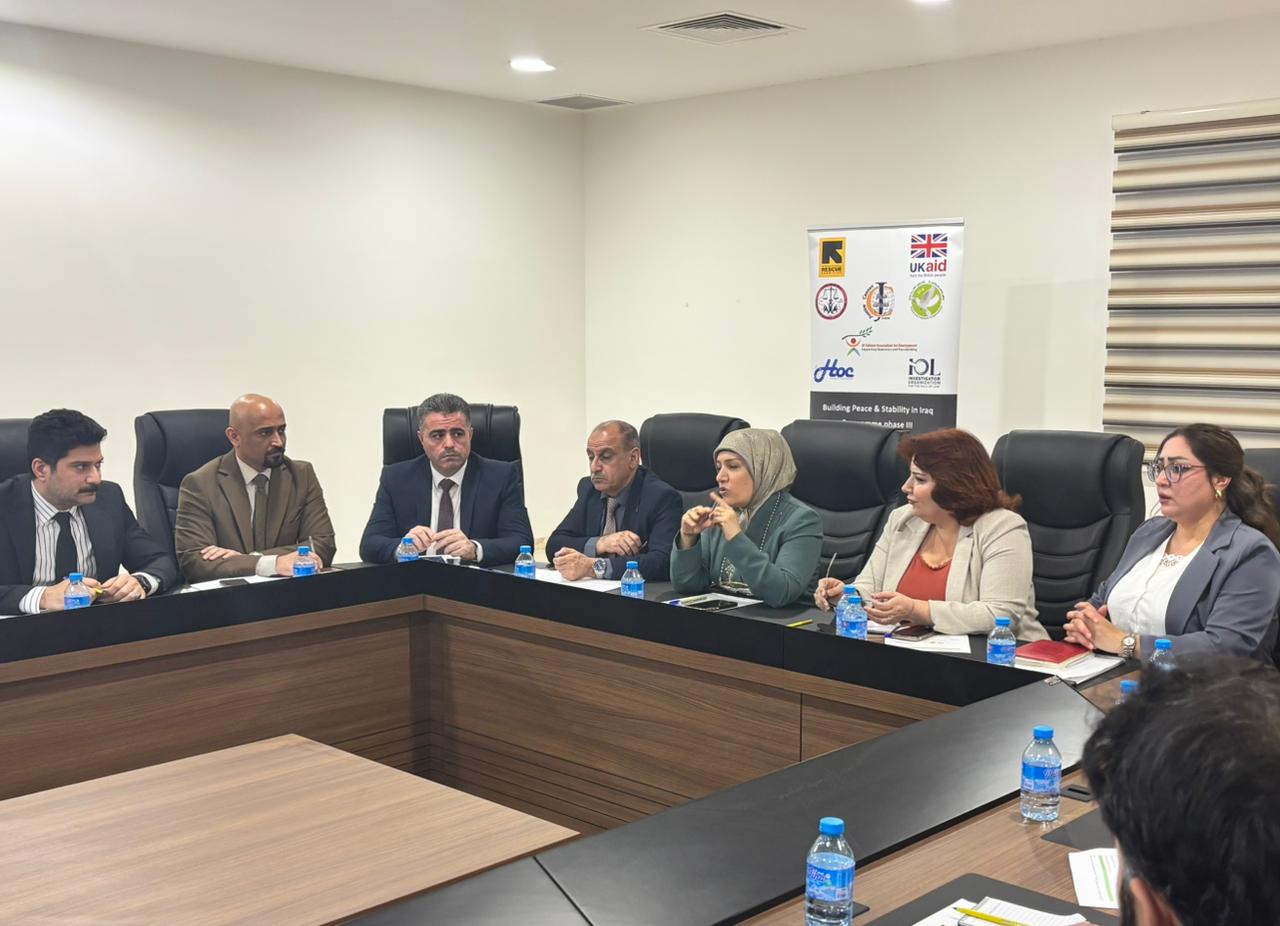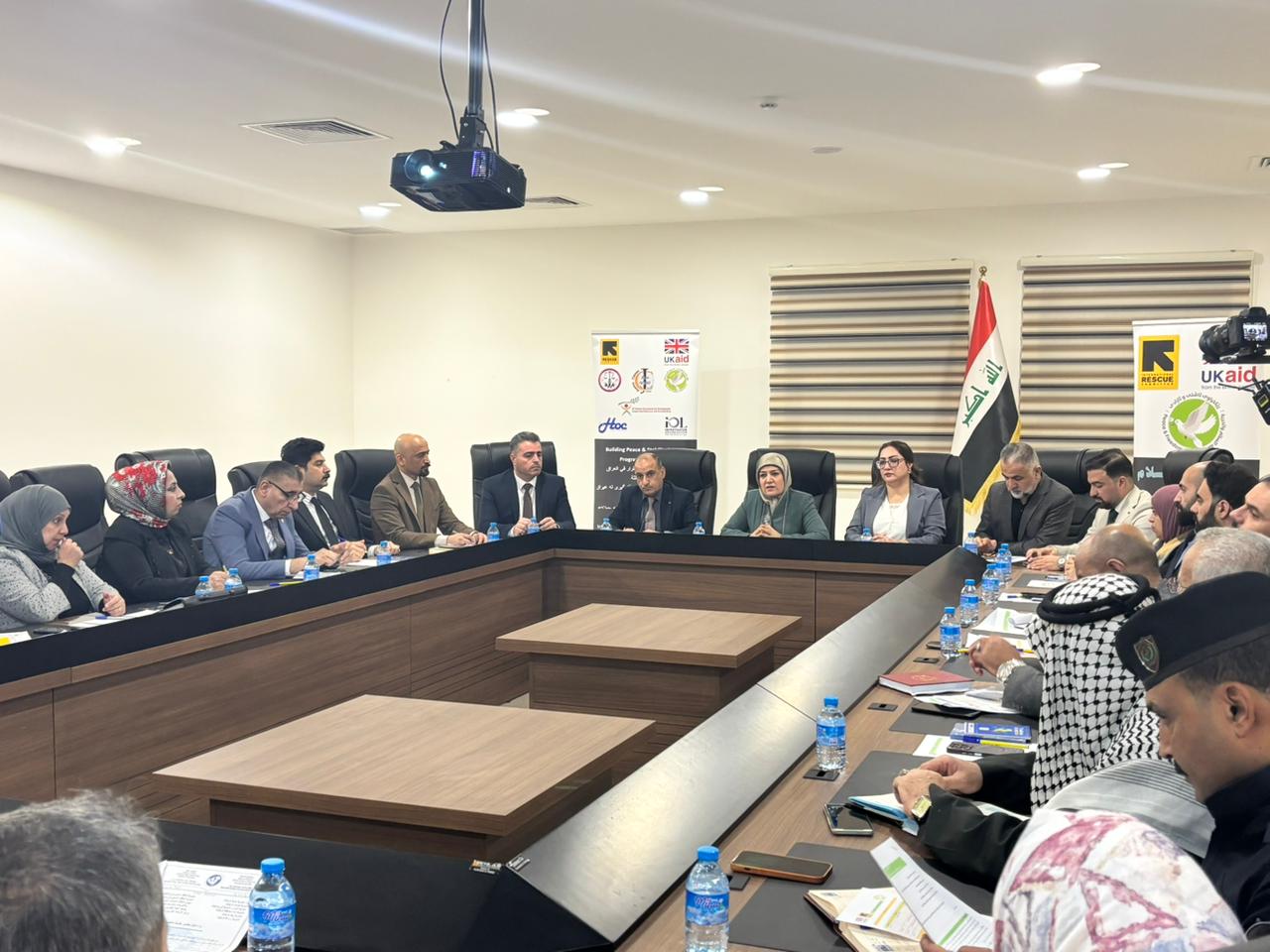



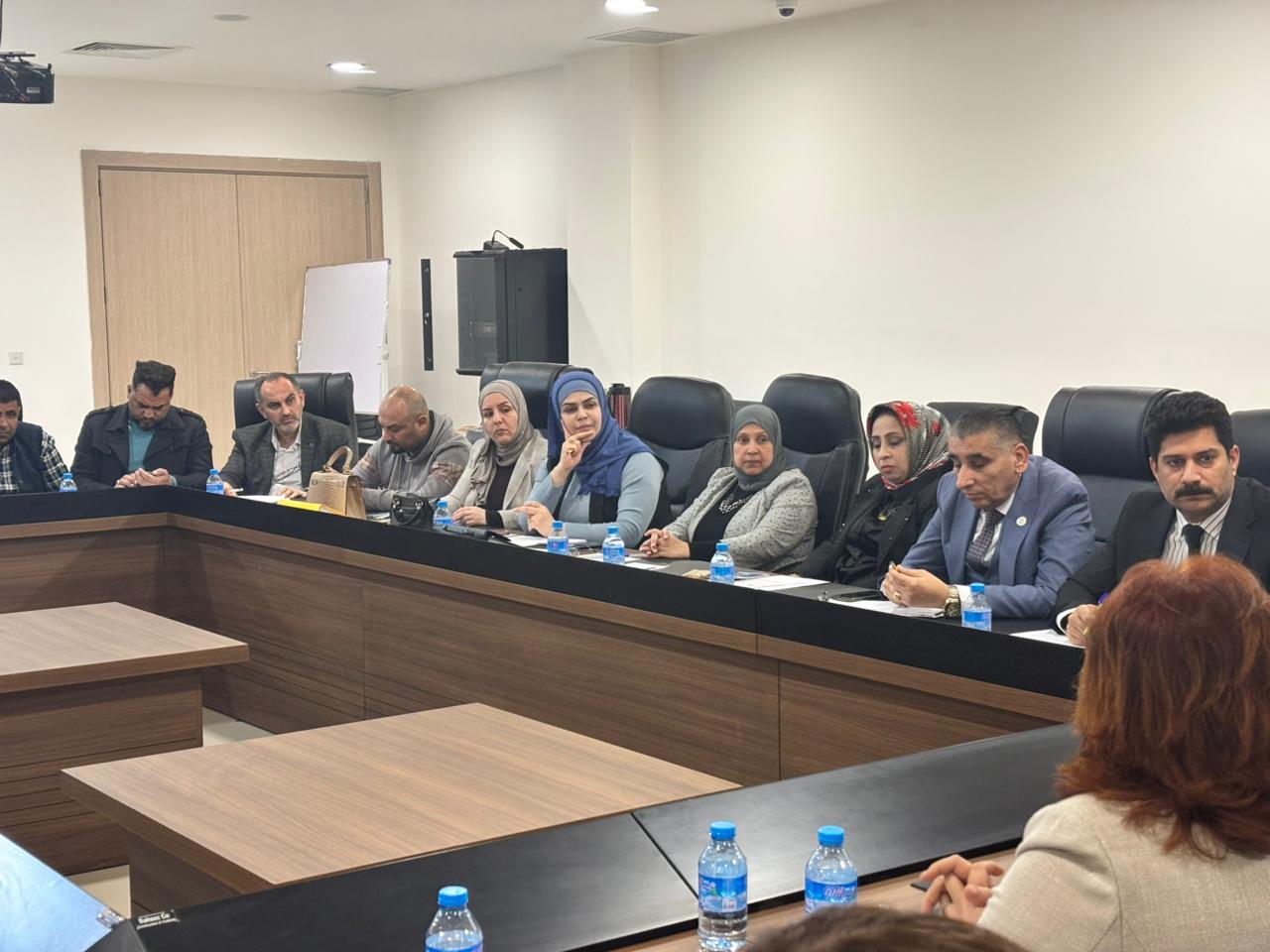
On February 15, 2024, Al-Salam and Al-Hurriya Organization / Kirkuk Office, in cooperation with the Total Quality Management Department at the Kirkuk Governorate Diwan, conducted an advocacy session on “Environmental Desertification,” with the participation of several officials and representatives of relevant government entities.
The session was attended by the Deputy Governor for Services and Development, Ms. Jihan Ibrahim; the Governorate Advisor for Agriculture and Desertification, Eng. Abdullah Hamad; Kirkuk Provincial Council Member, Ms. Barwin Fattah; in addition to the Director of the Total Quality Management Department, the Director of Public Relations, and the Director of Urban Afforestation and Green Belts at the Governorate Diwan. Representatives from relevant government departments also participated, including Environmental Police, the Directorate of Environment, Municipality, Agriculture, Municipalities, Water Resources, the Real Estate Claims Commission, and Religious Endowments.
The session commenced with introductions of participants, followed by a presentation of the key recommendations on combating desertification developed by the organization. These recommendations were the outcome of initiatives and field sessions implemented over recent months through the Natural Resources Committee previously established by the organization, targeting various areas across the governorate.
Discussions addressed several core themes, most notably the main causes of desertification and its consequences in light of climate change and water scarcity. Particular attention was given to official warnings that Iraq is transitioning from a stage of water scarcity to one of “water scarcity crisis” or “water stress,” which requires coordinated and collective action among concerned stakeholders to confront this challenge.
Participants emphasized the importance of expanding vegetation cover, with careful selection of tree species suitable to the region’s climate. They also called on the local administration to expedite approval of the Kirkuk Master Plan, considering it a strategic step toward protecting the urban environment. The plan includes well-planned allocation of green spaces and the establishment of vegetative belts that serve as a natural defense against desertification and air pollution, contributing to environmental balance, improved air quality, and regulated urban expansion based on sound scientific principles.
The session also discussed mechanisms to enhance environmental performance across different sectors and exchanged successful local and international experiences in environmental protection and desertification control, aiming to develop a shared vision that promotes environmental sustainability at the governorate level.
This activity falls under the building peace and Stability in Iraq project, implemented by Peace and Freedom Organization in partnership with the International Rescue Committee (IRC), and supported by FCDO.